

19 Oct Just Cause Eviction in California: A Landlord’s Checklist
Just cause eviction in California requires a covered landlord to state a statutory reason for termination once the occupancy requirements of Civil Code section 1946.2 are met, generally after 12 months. Added adult tenants can affect that timing. No-fault terminations also generally require one month’s rent in relocation assistance or a final-month rent waiver. Failure to comply with the section makes the written termination notice void.
You may legitimately need the property back. Your daughter is returning home, a tenant has stopped paying, or major work cannot wait. The mistake is treating the notice as the first task. Before preparing it, you need to know which law governs, whether the tenancy is covered, and what the proposed reason requires. Let me walk you through those questions in the order I would want you to answer them.
Does Your City Replace California’s Just Cause Eviction Rules?
Start with the address. Los Angeles, San Francisco, Oakland, San Diego, and other California cities have local eviction protections that can change coverage, permissible grounds, notice requirements, and relocation payments. A statewide exemption does not establish a local exemption.
Civil Code section 1946.2 specifies when a qualifying local just cause ordinance applies instead of its statewide framework. The tests differ for ordinances adopted before September 1, 2019, and later ordinances that meet the more-protective criteria. Do not choose the rule that looks easier or combine isolated provisions from different systems.
Check the city housing department’s coverage information and whether the address falls inside the city or in an unincorporated county area. The Attorney General’s tenant guidance is a useful starting point, but it does not replace an address-specific local review.
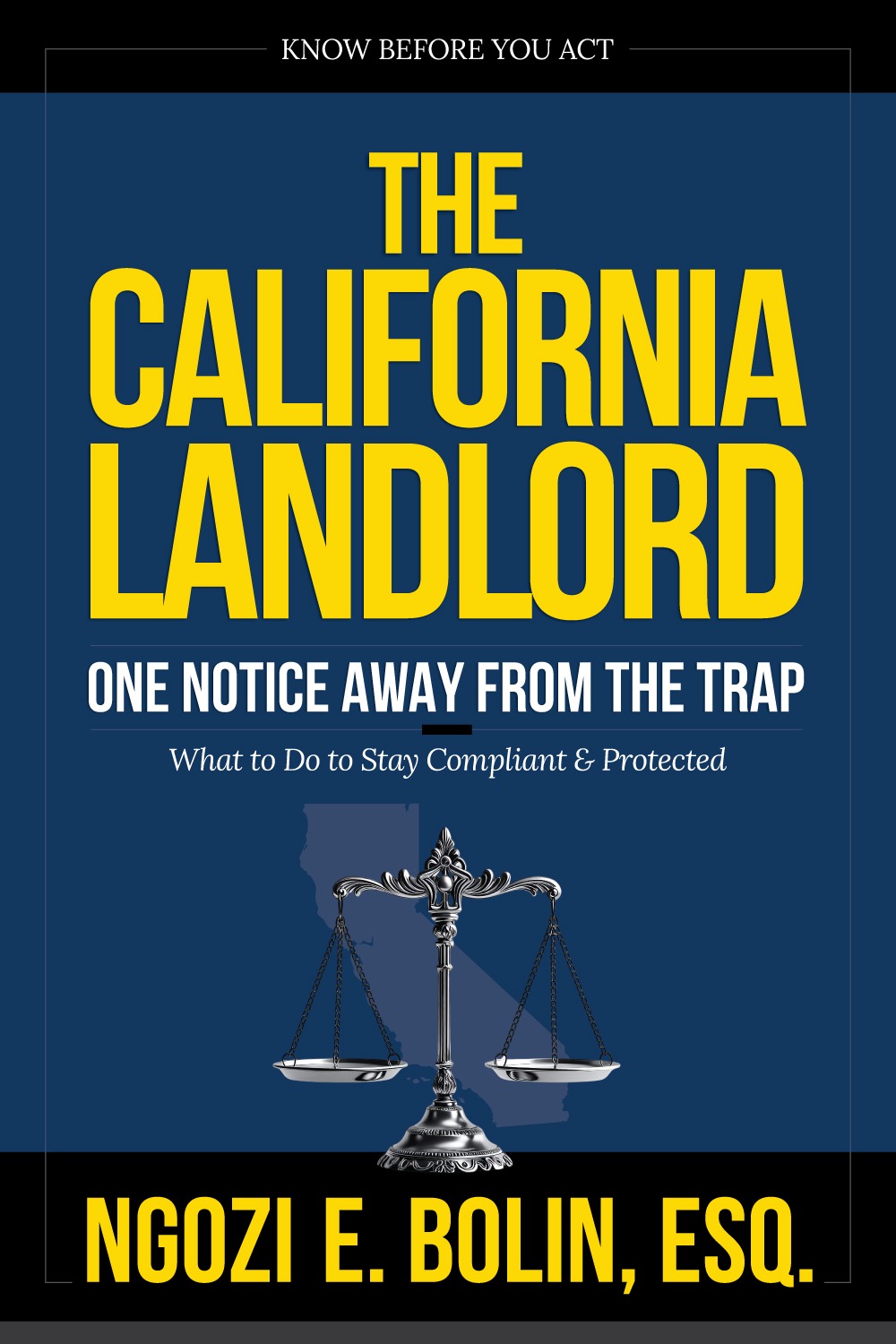
I make the larger point in The California Landlord: One Notice Away from the Trap: “process is not a formality that follows the decision.” Account for the governing rules before preparing a notice.
Has the Tenant Reached the Occupancy Threshold?
Under the statewide rule, just cause generally becomes necessary after a tenant has continuously and lawfully occupied the property for 12 months. If additional adult tenants are added before an existing tenant reaches 24 months, protection applies when all tenants have reached 12 months or at least one tenant has reached 24 months. Check the actual occupancy history rather than the date on the newest form.
A renewal does not ordinarily start a continuing tenant’s occupancy clock over. Neither does the sale of the building. Collect the prior lease and occupancy records if you bought an occupied property. Relying only on documents prepared after closing can leave you missing the period that establishes protection.
Write a timeline showing who moved in and when an adult tenant was added. Resolve conflicting records before deciding that protection has not attached.
Remember that a local ordinance may protect the tenancy on a different schedule. In my book, Chapter 6, Just Cause Evictions: The Foundation, explains why coverage comes before notice selection. A month-to-month arrangement describes how the tenancy continues; it does not, by itself, establish a right to end it without a reason.
Is the Property Exempt, and Can You Prove It?
The statewide just cause exemptions include qualifying newer construction within a rolling 15-year certificate-of-occupancy period, specified institutional and affordable housing, certain shared-owner living arrangements, qualifying owner-occupied single-family residences, and qualifying owner-occupied duplexes. Read the conditions for the exemption you actually claim. The exemption lists differ.
For a separately alienable single-family home or condo, the statutory ownership restrictions and prescribed written exemption notice are essential. A real estate investment trust, corporation, or LLC with a corporate member cannot use that exemption. For an ordinary tenancy commenced or renewed on or after July 1, 2020, the exemption statement belongs in the rental agreement.
The statute itself makes the notice a condition of the exemption, so a potentially qualifying home is not exempt without it. Conversely, inserting exemption language into a covered apartment’s lease does not make the apartment exempt. Both the facts and the required disclosure must support the claim.
Keep certificate, ownership, lease, and occupancy evidence together. Review coverage when ownership or residence changes. A prior owner’s assurance cannot substitute for a documented exemption.
The same exemption notice controls whether the statewide rent cap applies, which I cover in California Rent Increase Limits Explained.
Is the Reason At Fault, and Must You Allow a Cure?
At-fault grounds address tenant conduct. They include unpaid rent, a material lease breach, nuisance, waste, specified criminal activity, prohibited assignment or subletting, unlawful use, and refusal of lawful entry. Other statutory grounds address a qualifying refusal to renew, employment-linked occupancy ending, and failure to leave after the tenant gives a qualifying written move-out notice.
Identify the precise ground and the evidence. For unpaid rent, check the ledger and lawful amount. For entry, check whether your request itself complied with the law. For nuisance, document the actual incidents rather than relying on a general description that the tenant is difficult.
For a curable lease violation, section 1946.2 requires an opportunity to correct it under Code of Civil Procedure section 1161. If the tenant does not cure within the required period, the further three-day notice to quit may follow. Do not skip the cure step because you have already decided you want the tenancy to end.
My article on California 3-day notices explains the notice types from the tenant’s perspective. Read it before selecting a form; the facts must justify the notice.
Will the Owner or Family Member Actually Move In?
Owner move-in requirements were strengthened by SB 567. The intended occupant must be the qualifying owner or the owner’s spouse, domestic partner, child, grandchild, parent, or grandparent. The person must move in within 90 days after the tenant leaves and use the unit as a primary residence for at least 12 consecutive months.
The ground is unavailable if the intended occupant already occupies a rental unit on the property or a similar vacant unit is available there. The notice must identify the occupant and relationship and explain the tenant’s right to request proof. Qualifying leases also need the statutory move-in provision or the tenant’s written agreement. Entity, trust, and fractional ownership require review of the detailed owner definition.
Say you own a duplex in Sacramento, live elsewhere, and your daughter plans to return. First check local coverage and whether the statewide tenancy is protected. If a similar unit in the duplex is already vacant, the statewide owner move-in ground is unavailable for displacing the occupied unit. Her genuine need for housing does not remove that condition.
Chapter 8, No-Fault Evictions and Relocation Assistance, emphasizes preparation: “Documentation of intent must exist before the notice is served.” Preserve the occupancy records. A failed move-in can trigger offer-back and moving-expense duties.
Does the Planned Work Qualify as a Substantial Remodel?
A substantial remodel is more than new paint, cabinets, or a preferred construction schedule. The statewide definition covers qualifying permitted work on structural, electrical, plumbing, or mechanical systems, or qualifying hazardous-material abatement. It must be work that cannot reasonably be completed safely with the tenant living there and that requires vacancy for at least 30 consecutive days.
The tenant is not required to leave for days when remaining would comply with health, safety, and habitability requirements. Ask the contractor to document the actual scope and need for vacancy. A generic renovation proposal does not establish the statutory ground.
The notice needs the required description, expected duration or demolition date, supporting permits, and prescribed re-rental information. For qualifying hazardous-material work that requires no permit, the statute specifies a signed contractor agreement instead. It also requires information about expressing interest in reoccupancy. Check those details against the actual project before service.
Demolition, withdrawal from the rental market, and compliance with a qualifying government order are other no-fault grounds with their own requirements. They are not alternative labels for an inconvenient remodel. Have counsel review any withdrawal plan, which also runs through the Ellis Act and the applicable local process. If work is not commenced or completed as represented, follow the statutory re-rental requirements rather than assuming the original notice remains sufficient.
Have You Budgeted and Scheduled Relocation Assistance?
For a covered statewide no-fault termination, the owner generally must pay one month’s rent as relocation assistance or waive the final month’s rent in writing. The amount uses the rent in effect when the termination notice is issued. The tenant’s income does not eliminate the statewide entitlement. A statutory exception can apply where an agency or court determines the tenant caused conditions triggering a qualifying vacate order.
Direct payment must be made within 15 calendar days after service of the notice. Do not postpone payment until move-out. The notice must explain the entitlement. If you elect a waiver, state the amount waived and that no rent is due for the final month, before that rent becomes due.
Local requirements may be higher or operate differently. Under section 1946.2, the state payment is credited against any other relocation assistance the law requires, so the local amount often sets the real total. Work out that total before serving the notice.
Failure to comply strictly with the statewide relocation requirements voids the termination notice. Arrange the money and the delivery record in advance. Verify payment even if someone else manages it. Sincere intent does not excuse a missed deadline.
Is the Notice Complete, and Can You Follow Through?
A notice must state the applicable just cause and contain the information required for that ground. Failure to comply with section 1946.2 makes the written termination notice void. Review my article on mistakes that can void a California eviction notice for the separate service and timing issues. Correct content does not excuse defective delivery.
The consequences can extend beyond starting again. A material violation can expose an owner to actual damages and, in the court’s discretion, attorney’s fees and costs. Willful conduct or oppression, fraud, or malice can support up to three times actual damages and potentially punitive damages. The Attorney General, city attorneys, and county counsel have statutory authority to seek injunctive relief.
The Department of Real Estate’s annual compilation of real estate law reproduces these provisions. Use the current rules rather than an old packet passed between owners. AB 1529, effective January 1, 2026, which lets the general tenant-rights disclosure appear in the lease, does not eliminate the separate requirements for a termination notice.
Here is the checklist I would want you to finish before anything is served:
- Which law governs: the state rule or a qualifying local ordinance?
- Has the tenancy reached 12 months, or 24 with an added adult?
- Is the property exempt, and is the exemption notice in the lease?
- Is the ground at fault or no fault, and is a cure notice required?
- Does the notice state the cause and everything that ground requires?
- Is relocation assistance ready to pay within 15 calendar days?
After service, keep monitoring the obligations that continue, and document any move-in, work, payment, or offer back after the keys are returned.
When to Talk to a Lawyer
I would obtain legal review before any owner move-in, substantial-remodel, demolition, or withdrawal notice. Get advice as well if ownership is held through an entity or trust, the exemption language is missing, occupancy dates are disputed, or local protections may control. The consequences can outlast the notice period.
Bring the lease history, ownership and occupancy documents, the evidence for your ground, and any forms already sent. For construction, bring the permits and contractor’s scope. For family use, bring the concrete occupancy plan. Give your lawyer records supporting the proposed action.
If a notice has already gone out and you discover a defect, get advice before sending a replacement or filing suit. Account for the papers delivered and obligations already triggered. Changing plans after service may create further duties, including offering the apartment back.
My advice is to make the notice the result of a completed review. You should know why the law permits termination, what must happen next, and whether you can carry it through. That preparation gives a legitimate decision its best chance of holding up.
This article is general information about California law, not legal advice, and does not create an attorney-client relationship.
Frequently Asked Questions
Does just cause apply to every rental in California?
No. Statewide coverage depends on occupancy and exemptions, and qualifying local ordinances can govern instead. Check the address and tenancy before choosing a notice.
Can I end a month-to-month tenancy without a reason?
Once applicable just cause protection attaches, month-to-month status does not allow termination without a recognized reason. An exempt tenancy still requires compliance with other applicable laws.
How much relocation money do I owe for an owner move-in?
The statewide rule generally requires one month’s rent, paid within 15 calendar days of notice service, or a qualifying written waiver of the final month’s rent. Local requirements may be higher.
Can I evict a tenant to renovate the apartment?
Cosmetic work does not establish the statewide substantial-remodel ground. The project must meet the statutory work, safety, vacancy, documentation, and notice requirements.
What happens if my just cause notice leaves something out?
Failure to comply with Civil Code section 1946.2 makes the written termination notice void. Obtain advice before proceeding or attempting to replace it.
Last reviewed October 2026. This article is general information, not legal advice.
