

13 Sep Mistakes That Can Void a California Eviction Notice
A California eviction notice can be voided by mistakes that look small on paper: the wrong type of notice, a rent demand that includes a late fee, missing payment details, a miscounted deadline, or careless delivery. Where the Tenant Protection Act applies, leaving out the just cause or the relocation terms makes the notice void. In most cases the defect cannot be repaired in court, so you serve a corrected notice and the clock starts again.
If that sounds harsh, you are not alone in thinking so. Most of the owners who sit across from me are careful people with a tenant who really is behind on rent or really did break the lease. They are surprised to learn that none of that is what the judge looks at first. So let me walk you through where these notices go wrong, and what you can do before you serve one.
Why a Small Mistake Is Never Small
An eviction case, called an unlawful detainer, moves faster than an ordinary lawsuit. In exchange for that speed, courts generally expect you to follow every notice requirement closely. The notice is the foundation of the case, and you carry the burden of proving that it was the right notice, with the right contents, served the right way, and that the full time ran before you filed. The tenant does not have to prove you were wrong.
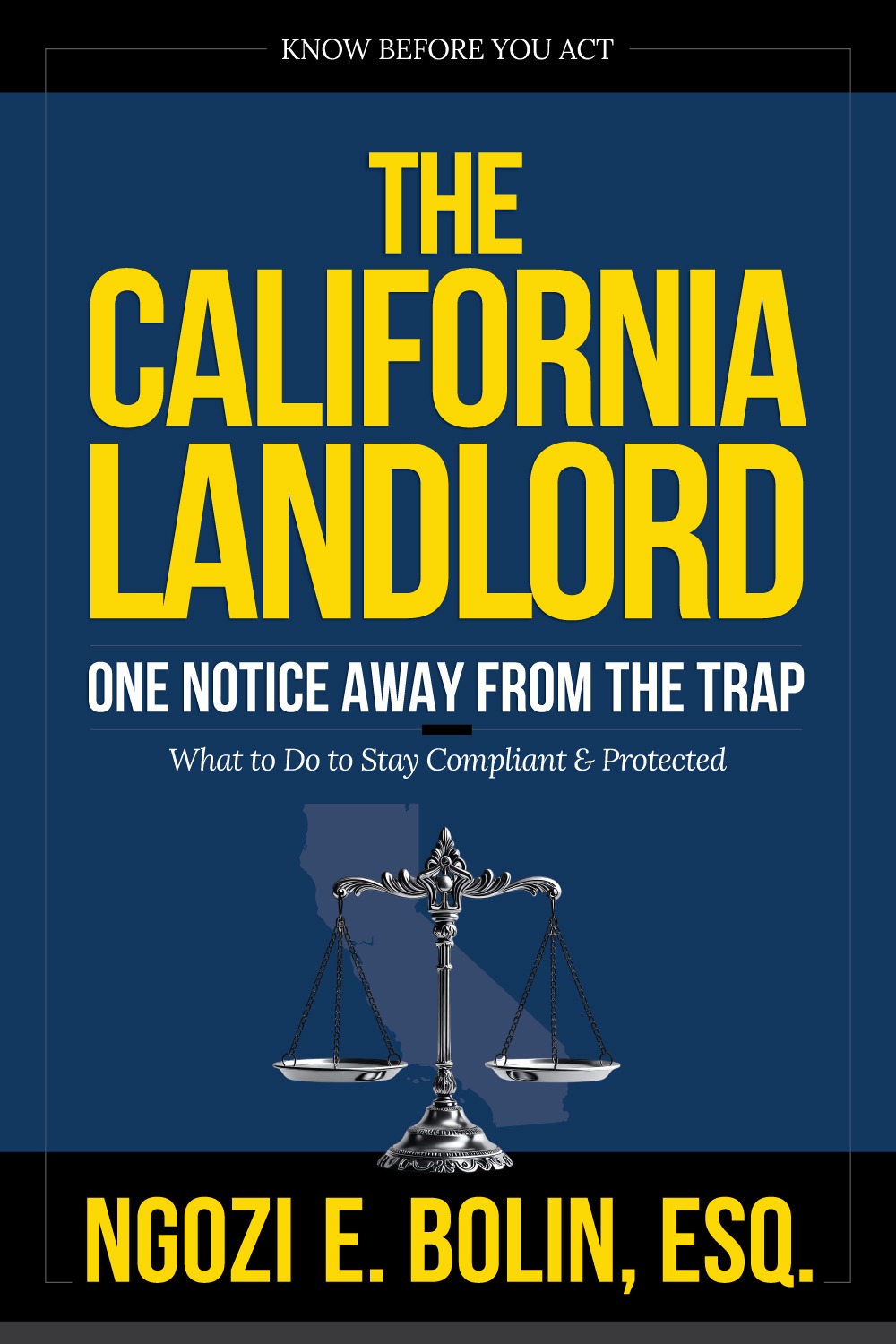
In my book, The California Landlord: One Notice Away from the Trap, I put it this way: “the paperwork is not administrative. The paperwork is the case.” A judge who finds a defect in the notice is not weighing your good intentions against the tenant’s conduct. Good faith does not rescue a defective notice, and it makes no difference whether you own one rental or forty.
The California Courts self-help guide gives the same warning in plainer terms: a notice that is missing required information can cost you the case. In practice that means a lost filing fee, lost weeks, and more unpaid rent while a new notice period runs. It also means a tenant who now knows where to look the second time.
Start With the Right Notice
Every situation has its own notice, and they are not interchangeable. The California Courts list of notice types includes these:
- 3-day notice to pay rent or quit, when the tenant is behind on rent.
- 3-day notice to perform covenants or quit, when the tenant broke the lease in a way that can be fixed.
- 3-day notice to quit, for serious problems such as nuisance, waste, or illegal use of the property.
- 30-day or 60-day notice, to end a month-to-month tenancy. The general rule is 30 days if the tenant has lived there less than one year and 60 days if longer.
- 90-day notice, for tenants in Section 8 subsidized housing.
The mistake I see most often here is the owner who is fed up and reaches for the strongest notice available. Picture a tenant who has moved in an unauthorized occupant. You consider that serious, so you serve a notice to quit with no chance to fix the problem. If a court decides the violation could have been corrected, that notice was the wrong one, and you are back at the beginning.
Your notice also locks in your reason. You generally cannot serve a notice for unpaid rent and then tell the judge that the real problem was a lease violation. Choose the ground that matches the facts, and make sure you can prove it with records that already exist on the day you serve.
Getting the Rent Demand Exactly Right
Nonpayment is the most common reason owners serve a notice, and in my experience it is also where the most notices fail. A notice to pay rent or quit must state the amount of rent that is due, and that number has to be right.
Rent means rent. The courts’ guide says the notice cannot include other money such as late fees, utilities, or damages. I devote much of Chapter 16 of the book, “Nonpayment of Rent and Late Fees,” to this one error because it is so common: an owner adds a late fee to the month’s rent and has now demanded more than the notice may lawfully ask for. If you believe a late fee is owed, that is a separate conversation and a separate claim.
Before you write the number, sit down with your ledger. Credit every payment, including partial ones. Be sure the monthly figure you are using is one you were lawfully entitled to charge, because a past rent increase that was not properly noticed can throw off the whole calculation. Read your lease as well. If it gives the tenant a grace period, my advice is to wait until that period has fully run before you serve anything.
There is a time limit too. Under Code of Civil Procedure section 1161, the notice may be served within one year after the rent becomes due. Older rent may still be owed, but it generally belongs in a different kind of claim.
The same statute requires the notice to tell the tenant how to pay. It must give the name, telephone number, and address of the person to whom rent should be paid. If payment can be made in person, it must give the usual days and hours that person is available. As an alternative, it may give the account number and the name and street address of a financial institution within five miles of the property, or refer to an electronic funds transfer procedure you have already set up with the tenant. Name the tenants, identify the rental address, and if the notice is about a lease violation, describe the problem clearly enough that the tenant knows what to fix. A vague notice helps no one, least of all you.
Counting the Days Without Tripping
Three days is rarely three days on the calendar. For a notice to pay rent or quit and a notice to perform covenants or quit, the three days exclude Saturdays, Sundays, and judicial holidays. The courts’ guide treats the 3-day notice to quit for serious problems differently and counts weekends and holidays.
The courts’ delivery instructions add two more rules. You do not count the day the notice was delivered or mailed; you start with the next day. And if the deadline falls on a weekend or court holiday, it moves to the next court day.
Here is how that plays out. Say you hand your tenant a notice to pay rent or quit on a Thursday, with no holidays nearby. Friday is day one, Monday is day two, and Tuesday is day three. The tenant has all of Tuesday to pay.
The tenant must get the full time the law allows. Filing even one day early can lead the court to dismiss the case. As I tell owners in the book, “Speed is not a substitute for sequence.” If you are unsure whether the time has run, waiting one more day costs you very little.
How the Notice Reaches Your Tenant
A perfectly written notice can still fail if it was delivered the wrong way. Code of Civil Procedure section 1162 allows three methods for residential tenants, generally used in this order:
- Personal delivery to the tenant.
- Substituted service. If the tenant is absent from home and work, leave a copy with a person of suitable age and discretion and mail a copy to the tenant’s residence.
- Post and mail. If that is not possible, post a copy in a conspicuous place on the property and mail a copy.
The person who serves the notice must be at least 18. When mailing is part of the method, the courts’ guide says to start counting the day after you mail. The errors here are usually shortcuts. The owner tapes the notice to the door and never mails the copy, or sends a text or an email because that is how the two of them have always communicated. Those shortcuts invite a challenge.
Then comes the part many owners skip: writing it down. In Chapter 17, on what judges expect in eviction court, I explain that the proof of service is the document that shows when and how the notice was delivered. Record who served it, the date and time, the method, any earlier attempts, and when and where the copy was mailed. Have the server sign and date that record the same day, while the details are fresh.
Just Cause, Relocation Money, and Your City’s Rules
For many rentals, the notice has to do more than give a deadline. Under Civil Code section 1946.2, part of the Tenant Protection Act and most recently amended effective January 1, 2026, once a tenant has continuously and lawfully occupied a covered unit for 12 months, you generally cannot end the tenancy without just cause, and the cause must be stated in the written notice. Some properties are exempt, and the exemptions have their own conditions.
The statute divides just cause into at-fault reasons, such as unpaid rent or a lease violation, and no-fault reasons, such as an owner moving in or a substantial remodel. Each has its own traps. For a curable lease violation, you must first give a notice of the violation with a chance to fix it. Only if it is not cured may you serve a 3-day notice to quit.
For a no-fault reason, the notice must tell the tenant of the right to relocation assistance or a rent waiver. The amount equals one month of rent, and a direct payment is due within 15 calendar days of service. Owners often treat that payment as something to settle at move-out. The statute does not. Notices based on owner move-in or substantial remodel also need extra content. An owner move-in notice, for example, must name the person who will live there and state that person’s relationship to the owner.
The statute says that failing to comply renders the termination notice void. A landlord who tries to recover possession in material violation can owe actual damages, and up to three times that amount for willful conduct.
Then there is your city. Many cities and counties have their own just cause or rent ordinances, often with added notice language, higher relocation amounts, or filing requirements. Where a qualifying local ordinance applies, it controls. Part III of the book covers just cause in detail, but the habit I most want you to form is simple: look up the rules for the property’s address before you draft, not after a tenant’s lawyer points them out.
After the Notice: Rent, Retaliation, and Self-Help
Suppose the notice is flawless. You can still undo it by what you do next.
If the tenant pays the full amount demanded within the notice period, the matter is resolved and you cannot file. The harder question is the tenant who offers part of the rent, or shows up with money after the deadline has passed. Taking that payment can be treated as waiving the notice in a residential case, which sends you back to serve a new one. Get advice before you accept anything.
Your reason matters as much as your paperwork. A notice that is perfect on paper still fails if the motive behind it is illegal. Civil Code section 1942.5 restricts evictions within 180 days after a tenant who is current on rent complains about habitability, and fair housing laws bar evictions based on protected characteristics. If your tenant recently asked for repairs or called a code inspector, expect the timing of your notice to be examined.
Finally, never take matters into your own hands. Changing the locks, removing doors or windows, taking the tenant’s belongings, or cutting off utilities to force a move-out is unlawful, however frustrated you are. Civil Code section 789.3 allows the tenant to recover actual damages plus up to $100 for each day of the violation, with a minimum of $250, and attorney’s fees.
When to Talk to a Lawyer
The best time to have a notice reviewed is before it is served. Once a case is dismissed, the lost time and rent do not come back. I would encourage you to speak with a California landlord-tenant attorney first if the property may be covered by the Tenant Protection Act or a local ordinance, if the tenant has complained about conditions, if you have already accepted a payment, or if an earlier notice was challenged. A second set of eyes on the notice, the ledger, and the service record usually costs far less than starting over.
This article is general information, not legal advice. Laws and local rules change, and the right answer depends on your facts.
Frequently Asked Questions
What happens if my eviction notice turns out to be defective?
A court generally looks at the notice as it was served, so a defect usually cannot be fixed once the case is filed. The usual remedy is to serve a corrected notice and wait out a new notice period before filing again.
My tenant offered part of the rent after I served a 3-day notice. Should I take it?
Be careful. In a residential case, accepting a partial payment, or any payment after the notice expires, can be treated as waiving the notice, so get legal advice before you accept.
I served the notice on a Friday. When do the three days end?
For a notice to pay rent or quit, you skip the day of service, Saturdays, Sundays, and judicial holidays. With no holidays, a Friday notice makes Monday day one and Wednesday day three, and the tenant has all of Wednesday to comply.
Is it enough to tape the notice to the door?
Not by itself. Posting is the last of the three methods in Code of Civil Procedure section 1162, it is available only when the first two are not possible, and a copy must also be mailed.
Do I owe relocation money every time I end a tenancy?
No. Under Civil Code section 1946.2 it applies when a covered tenancy is ended for a no-fault just cause, such as owner move-in or substantial remodel. The amount is one month of rent, paid directly within 15 calendar days of service or given as a written waiver of the final month’s rent, and local ordinances may require more.
Last reviewed October 2026. This article is general information, not legal advice.
