

19 Oct Good Cause Eviction in New York: What Landlords Need to Know
Good Cause Eviction prevents a covered New York landlord from evicting or refusing renewal without a legally recognized reason and makes increases above a yearly rent standard presumptively unreasonable. It applies in New York City and adopting municipalities. Qualifying owners with no more than 10 units statewide are generally exempt under the default rule, but local thresholds differ. Required coverage notices also apply to landlords claiming exemptions.
If you own a small building, another layer of rules can feel like another opportunity to make an expensive mistake. You may have heard that small landlords are exempt, then heard something different from your managing agent. I understand the frustration. The useful question is which rule applies to your ownership and this particular unit. Let me walk you through coverage, lawful reasons, and the documents I would want in place before you act.
First, Check Where Good Cause Eviction Applies
New York’s Good Cause Eviction Law took effect on April 20, 2024. Real Property Law Article 6-A supplies the framework. New York City is covered by statute; other cities, towns, and villages must adopt a local law. A property outside NYC is not covered merely because a nearby municipality opted in.
HCR’s 2026 Good Cause notice lists the following adopting municipalities based on notices received as of May 4, 2026: Albany, Beacon, Binghamton, Hudson, Ithaca, Kingston, Middletown, New Rochelle, Newburgh, the City of Poughkeepsie, Rochester, White Plains, the Town of Fishkill, the Town of Poughkeepsie, Catskill, Croton-on-Hudson, New Paltz, Nyack, and Tarrytown. That reporting cutoff matters. Verify later local enactments before relying on the list for a specific address.
The city and town distinctions are deliberate. A mailing address does not always establish the municipality governing the property. Check the actual boundary and the adopted law, including its effective date and local exemption choices.
Create a short coverage record for each property rather than making one assumption for your entire portfolio. Keep the source and the date you checked it. The point is to be able to explain the answer later, when a tenant or court asks why you proceeded under a particular rule.
Count the Units You Own Beyond This Building
Under Real Property Law section 211, the default small-landlord definition generally reaches an owner with no more than 10 units anywhere in New York State. The statute does not say your own home is left out of that count; it leaves the owner’s principal residence out only of the unit list a landlord must give in an eviction case. If your exemption depends on not counting your home, get advice first. Ownership held jointly or through entities requires tracing the relevant interests, not simply counting the apartments under one management account.
Say you own a three-family rental house in Brooklyn and an eight-unit rental building upstate, and your principal residence is elsewhere. The relevant total is 11 rental units, so the Brooklyn building does not qualify for the default small-landlord exemption merely because it has three apartments. Putting the properties in separate folders does not change the ownership inquiry.
Outside NYC, read the adopting municipality’s threshold. HCR’s published table shows many localities using no more than one unit statewide, while White Plains uses no more than four. A landlord who meets the NYC default may still have a covered unit elsewhere.
Do this count before preparing the notice. Include a review of co-ownership and beneficial interests with your lawyer where necessary. If you acquire another property or change ownership, revisit the result. An exemption established for last year’s renewal is not a permanent classification that can safely be copied into every future lease packet.
Other Exemptions Need Their Own Proof
Real Property Law section 214 provides separate exemptions for owner-occupied housing with no more than 10 units, rent-regulated and specified affordable housing, qualifying condominiums and cooperatives, and other defined categories. A small-landlord exemption and an owner-occupied-building exemption are distinct. Losing one does not establish whether another applies.
Qualifying construction with a temporary or permanent certificate of occupancy issued on or after January 1, 2009, is exempt for 30 years following issuance. The high-rent exemption generally uses rent above 245% of the applicable fair market rent, although adopting municipalities can select a different percentage, and most that have opted in use 345%. Check the current county and unit-size figures rather than using an old dollar threshold.
Other categories include qualifying seasonal or transient housing, specified institutional and religious housing, dormitories, manufactured homes in parks, certain employment-related occupancy, and qualifying recovery by a sublessor. These are statutory categories with conditions, not interchangeable descriptions for an unusual rental arrangement.
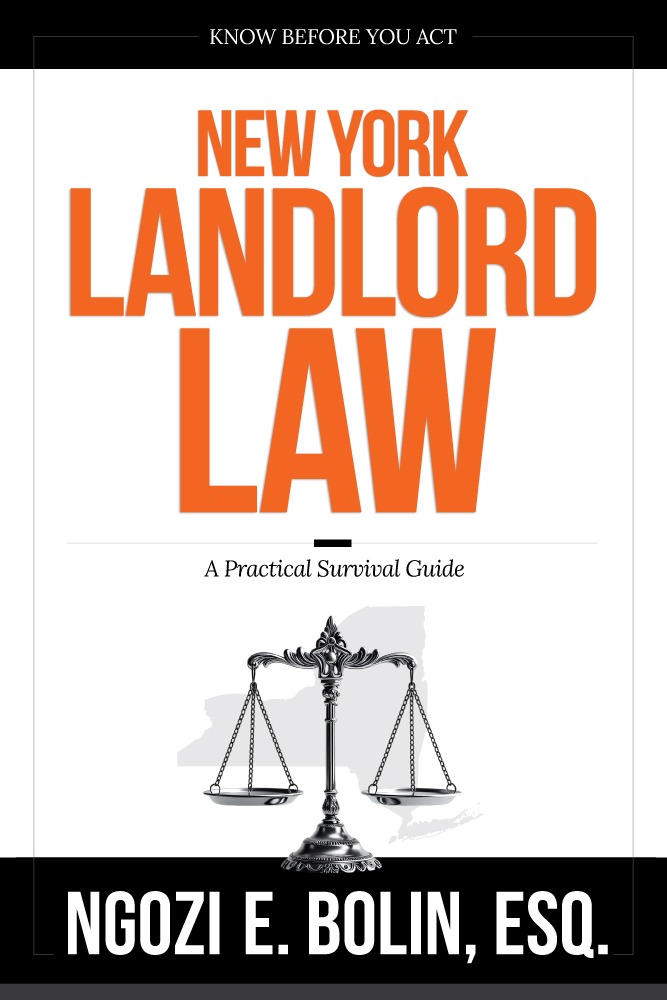
In Chapter 9 of New York Landlord Law: A Practical Survival Guide, Good Cause Eviction & When Termination Is Prohibited, I write, “The danger is that an exemption can be lost.” Chapter 21, Small Landlord Exemptions & Owner-Occupied Properties, examines that risk further. Keep proof of the facts supporting your exemption. If stabilization is the basis, first confirm the apartment’s regulated status, rather than relying only on a building label.
A Recognized Reason Must Fit the Actual Facts
For a covered unit, Real Property Law section 216 recognizes grounds including unpaid lawful rent, substantial lease violations, nuisance, damaging conduct, illegal use, and unreasonable refusal of access for specified legitimate purposes. A substantial lease violation generally requires written notice and an opportunity to stop the violation within 10 days of receipt. Describe the conduct and preserve evidence supporting it.
Owner or qualifying family use requires a genuine plan for a principal residence, no suitable alternative in the building, and clear and convincing evidence. That ground is unavailable against a tenant who is at least 65 or is a disabled person as defined by the law. Demolition and withdrawal from the rental market also require clear and convincing proof of good faith.
An unlawful occupancy ground has additional safeguards, including the relevant agency’s vacate order and judicial findings. Refusal of reasonable renewal changes can also qualify under specified notice conditions. These grounds should not be compressed into a general statement that you want the apartment back.
As I explain in the book, “asserting a reason is not the same as establishing it.” Start with what actually happened, then determine whether the statute recognizes that ground and what it requires. Do not choose a convenient reason first and try to build a record around it afterward. The notice should reflect a decision the evidence already supports.
Treat the Rent Standard as a Presumption
The Good Cause rent standard is the lower of 10% or 5% plus the applicable annual inflation figure. Using the inflation figures in HCR’s 2026 notice (3.38% and 3.15%), the standard is 8.38% in NYC and the designated downstate region and 8.15% in the Northeast region used elsewhere. Outside NYC, local adoption and property coverage must still be established.
This is not a fixed rent-stabilization guideline. An increase above the standard is presumptively unreasonable, and the landlord may present evidence justifying it. Relevant considerations include operating expenses, property taxes, and qualifying significant repairs. An increase at or below the standard is not deemed unreasonable under this particular statutory test, although other rules still apply.
If you plan a higher increase, prepare the explanation before sending it. Organize actual invoices, tax records, insurance costs, and the relevant repair information. A general statement that everything costs more will not give the reviewing person the same information as a documented account of this property’s expenses.
Your tenants are reading about these same rules. My article for renters on how much a landlord can raise rent in New York shows what they will be checking when your renewal arrives.
Also review increases across the calendar year rather than treating each notice as an isolated event. The law does not become irrelevant because a new proposal follows an earlier adjustment. Keep the calculations together so you can show the full sequence. A reasonable discussion with a tenant begins with a number you can explain, and a disputed increase should not become the foundation of a nonpayment case without legal review.
The Good Cause Notice Belongs in Your Regular Paperwork
Real Property Law section 231-c requires the applicability or inapplicability notice with initial leases, renewal leases, the specified rent-increase or nonrenewal notices, statutory rent demands, and eviction petitions. If you claim an exemption, the notice must identify the basis. An exemption from substantive Good Cause protection is not an exemption from completing the required disclosure.
Use the prescribed Good Cause notice form and the current supporting information. HCR’s annual publication supplies figures and adoption information; the tenant disclosure itself is the notice required by section 231-c. They serve related but different purposes. Simply attaching a general explanation of the law is not the same as completing the required notice for the unit.
Review the whole packet rather than only the lease. A managing agent may have updated the renewal form while leaving an older rent demand or termination template in circulation. Ask which version was actually sent, and keep the completed notice with proof of delivery. An unchecked template saved on a computer is not evidence of what the tenant received.
Where the statute requires a reason for nonrenewal or a justification for an above-standard increase, supply it. Do not leave that work for the petition. A tenant should be able to understand the stated coverage position and the action proposed from the papers the law requires you to provide.
Good Cause Adds to the Existing Eviction Process
Good Cause does not replace advance notice, a rent demand, service, or court proceedings. Real Property Law section 226-c generally requires 30, 60, or 90 days of written notice for nonrenewal or a renewal increase of at least 5%, depending on occupancy and lease length. A covered nonrenewal also needs a recognized ground.
For nonpayment, RPAPL section 711 generally requires the statutory written rent demand with at least 14 days to pay or surrender possession before proceeding. Good Cause coverage can affect whether a disputed increase belongs in the rent being demanded. Check the lawful amount before checking the delivery date.
My guide to evicting a tenant in New York explains the broader sequence. Read that process alongside the coverage analysis. A valid reason and proper procedure are separate requirements; a strong answer on one does not cure a failure on the other.
Before acting, count your units, document any exemption, update the required packets, review the increase, and assemble proof of the ground. Give each property a file that someone else could understand without an oral explanation from you. Clean paperwork protects owners because it preserves what happened, when it happened, and why the law permitted the next step.
When to Talk to a Lawyer
Get advice before serving papers if the unit count involves partners or multiple entities, owner occupancy has changed, or a high-rent exemption depends on a disputed threshold. I would also involve counsel before relying on owner use, demolition, withdrawal, or a higher-than-standard increase. Those decisions can create obligations that continue after the tenant leaves, and a tenant removed on a false owner-use, demolition or withdrawal claim can sue for damages and attorney’s fees.
A lawyer should review a planned case where the tenant challenges the exemption, the earlier notices used inconsistent coverage statements, or your explanation depends on events that were never documented. Bring the actual papers already delivered. Recreating the packet from the version you intended to send can hide the issue that needs attention.
For a claimed small-landlord exemption in an eviction proceeding, the statute requires ownership and unit information to be provided to the tenant. Organize that information early, including relevant natural-person ownership behind entities. The fact that an ownership structure is familiar to you does not make it apparent to someone reviewing the case.
My advice is to settle the coverage question while the tenancy is being managed, not after a petition is filed. That is when you have the best opportunity to correct forms, confirm records, and choose a lawful course without the cost and pressure of an active dispute.
This article is general information about New York law, not legal advice, and does not create an attorney-client relationship.
Frequently Asked Questions
Does Good Cause Eviction apply to small landlords?
The default exemption generally covers qualifying owners with no more than 10 units statewide. Adopting municipalities outside NYC can set a different threshold, often one unit.
Can I refuse to renew a covered tenant’s lease?
Only a legally recognized Good Cause ground can support a covered nonrenewal. The end of the lease alone is not sufficient.
How much can I raise the rent under Good Cause?
The standard is the lower of 10% or 5% plus applicable inflation. An increase above it is presumed unreasonable but may be justified with appropriate evidence.
Do exempt landlords need to give a Good Cause notice?
Landlords claiming an exemption must still provide the required applicability notice with the documents specified in Real Property Law section 231-c. The notice must state the exemption basis.
Can I recover a covered apartment for a family member?
The intended occupant and proposed use must satisfy the statute, including the principal-residence and proof requirements. This ground cannot be used against a tenant who is at least 65 or qualifies as disabled under the law.
Last reviewed October 2026. This article is general information, not legal advice.
