

12 Apr Age Discrimination and Pretextual Firing of Older Workers in Recent Years
The short answer
Firing an older worker for a made-up reason to hide age bias is illegal under the federal Age Discrimination in Employment Act (workers 40 and over) and under New York and California law. Under federal law, the worker must prove that age was the “but-for” cause of the firing, and is often able to do so by showing that the employer’s stated reason is false. In New York and California, a charge with the EEOC generally must be filed within 300 days.
Pretextual firing occurs when an employer terminates an employee for a reason that is not the true reason for the termination. One of the most common forms of pretextual firing is discrimination against older workers, also known as age discrimination. Age discrimination in the workplace is a persistent problem that has received significant attention in recent years.
Age discrimination is consistently one of the most common complaints filed with the United States Equal Employment Opportunity Commission (EEOC). In fiscal year 2020, age was cited in about 21% of the 67,448 charges filed with the EEOC, roughly 14,000 charges. Older workers are often subject to negative stereotypes, including that they are less productive or less able to learn new skills. As a result, they may be passed over for promotions, training opportunities, and job openings. When older workers are terminated, it may be due to their age rather than their job performance or conduct.
This article will examine the issue of pretextual firing of older workers in recent years. The article will explore the legal background surrounding age discrimination in the workplace, including relevant Supreme Court cases and cases from New York and California. Additionally, the article will discuss how older workers can prove age discrimination, the impact of pretextual firing on older workers, and the legal remedies available to older workers who have been subject to age discrimination. Ultimately, this article aims to provide insight into the prevalence of age discrimination in the workplace and the remedies available to older workers to protect and/or seek vindication of their rights.
Legal Background
Age discrimination in the workplace is prohibited under the Age Discrimination in Employment Act (ADEA) of 1967. 29 U.S.C. § 621 et seq. The ADEA protects individuals who are 40 years of age or older from employment discrimination based on their age, and it applies to employers with 20 or more employees. In order to establish a prima facie case of age discrimination, a plaintiff must show that (1) he or she is a member of the protected age group, (2) he or she was qualified for the position in question, (3) he or she suffered an adverse employment action, and (4) the adverse action occurred under circumstances giving rise to an inference of discrimination. See McDonnell Douglas Corp. v. Green, 411 U.S. 792, 802 (1973).
Age discrimination in the workplace has long been an issue, and older workers have historically been subject to unfavorable treatment in comparison to their younger counterparts. Despite advancements in equal employment opportunity laws, older workers continue to face discrimination, and pretextual firings are a common method of masking discriminatory actions. This article delves into legal cases from the Supreme Court and from New York and California concerning pretextual firings of older workers.
Gross v. FBL Financial Services, Inc.
The Supreme Court in Gross v. FBL Financial Services, Inc., 557 U.S. 167 (2009), addressed the issue of burden of proof in age discrimination cases. This case clarified the burden of proof in ADEA cases. A pivotal question asked in this case was whether a plaintiff needs to submit direct evidence of discrimination filed under the ADEA for the burden of proof to shift to the employer. The court held that a plaintiff bringing an ADEA disparate-treatment claim must prove, by a “preponderance of the evidence,” that age was the “but-for” cause of the challenged adverse employment action. The court continued that the burden of persuasion does not shift to the employer to show that it would have taken the action regardless of age, even when a plaintiff has produced some evidence that age was one motivating factor in that adverse employment decision.
This means that the plaintiff must prove that they would not have been terminated but for their age. The court reiterated the ordinary meaning of the ADEA’s requirement that an employer took adverse action “because of” age is that age was the “reason” that the employer decided to act, citing Hazen Paper Co. v. Biggins, 507 U.S. 604, 610 (1993).
It should be noted that Gross did not do away with the burden-shifting framework set forth by the Supreme Court in McDonnell Douglas Corp. v. Green, 411 U.S. 792 (1973). Most federal courts, including the Second Circuit, which covers New York, continue to use that framework to organize ADEA cases built on circumstantial evidence. What Gross rejected is the “mixed-motive” approach, under which the burden of persuasion could shift to the employer.
Reeves v. Sanderson Plumbing Products, Inc.
In 2000, the Supreme Court in Reeves v. Sanderson Plumbing Products, Inc., 530 U.S. 133 (2000) dealt with the issue of pretextual firing. Roger Reeves, a 57-year-old supervisor, was fired for alleged errors in keeping employee attendance records. A jury found in his favor, but the Court of Appeals set aside the verdict. The Supreme Court reinstated it, holding that a plaintiff’s prima facie case, combined with sufficient evidence for a jury to find that the employer’s stated reason for the adverse employment action is false, may permit the jury to conclude that the employer unlawfully discriminated, without additional, independent evidence of discrimination. (Reeves, 530 U.S. at 148). The Court cautioned that this will not always be enough, for example where the record conclusively reveals some other, nondiscriminatory reason for the employer’s decision.
State laws in New York and California also address the pretextual firing of older workers. In New York, the state’s Human Rights Law prohibits employment discrimination based on age and protects workers 18 years of age and older. N.Y. Exec. Law § 296.
Similarly, in California, the state’s Fair Employment and Housing Act (FEHA) prohibits discrimination based on age against workers 40 years of age and older. Cal. Gov’t Code §§ 12926, 12940(a). In Reid v. Google, Inc., 50 Cal. 4th 512 (2010), the California Supreme Court rejected the so-called “stray remarks” doctrine, under which some courts had disregarded age-related comments made by coworkers or by people who were not the decision-makers. The court held that such remarks must be considered together with all of the other evidence when deciding whether an age discrimination case can go to trial.
These cases have highlighted the importance of proving age discrimination and the impact of pretextual firing on older workers. In the following sections, we will explore how older workers can prove age discrimination and the legal remedies available to them.
Proving Age Discrimination
Proving age discrimination can be a challenging task for older workers who have been terminated from their jobs. However, there are legal guidelines that can be followed to strengthen the case of age discrimination. It will behoove an employee who “smells” an impending adverse job action to seek legal counsel, even before the job action occurs.
Gorzynski v. JetBlue Airways Corp.
Gorzynski v. JetBlue Airways Corp., 596 F.3d 93 (2d Cir. 2010) is a federal case from the Second Circuit, which covers New York, that highlights the importance of circumstantial evidence in proving age discrimination. The plaintiff in this case, a 54-year-old customer service supervisor, was terminated after complaints about her performance. She argued that the employer’s stated reasons for the termination were a pretext, and that the true reason was age discrimination. The Second Circuit found evidence from which a jury could find pretext, including an inadequate investigation of the complaint used to justify her firing, harsher performance ratings than a younger coworker received, and discipline for conduct that went unpunished when younger employees engaged in it. The Second Circuit Court of Appeals made it clear that an employee can prove pretext by showing that the employer’s proffered reasons for termination were not credible or that they were inconsistent with the employer’s actions or statements. The language of the Second Circuit is very helpful. The court stated:
“Given the cumulative weight of this evidence, we believe that a reasonable juror could find, not only that the explanations given by JetBlue for Gorzynski’s termination were pretextual, but also that, together with …, it was her age that was the “but for” cause of Gorzynski’s termination.”
The court accordingly revived her age discrimination claim, which the trial court had dismissed.
O’Connor v. Consolidated Coin Caterers Corp.
O’Connor v. Consolidated Coin Caterers Corp., 517 U.S. 308 (1996), is a U.S. Supreme Court case about what an older worker must show to begin an age discrimination case. The plaintiff in this case, a 56-year-old manager, was terminated and replaced by a 40-year-old. The lower courts dismissed his claim because his replacement was also within the ADEA’s protected group of workers 40 and older. The Supreme Court unanimously reversed. It held that the ADEA prohibits discrimination because of age, not because of membership in the protected class, so a plaintiff does not have to show that he or she was replaced by someone under 40. Replacement by a substantially younger worker is a far more reliable indicator of age discrimination. (O’Connor, 517 U.S. at 312-13.)
Guidelines for Proving Age Discrimination
To prove age discrimination, the plaintiff must first establish a prima facie case of discrimination. This requires the plaintiff to show that they were 40 years of age or older, qualified for the position, and suffered an adverse employment action under circumstances suggesting age discrimination, such as being replaced by a substantially younger worker. Once a prima facie case has been established, the employer must offer a legitimate, non-discriminatory reason for the adverse employment action. The plaintiff must then show that the stated reason is a pretext and that age was the “but-for” cause of the decision.
The burden of persuasion always remains with the plaintiff in ADEA cases. The employer’s burden is only to state its reason, not to prove it.
The standard can differ under state law. Under California’s FEHA, for example, the employee must show that age was a “substantial motivating reason” for the decision, rather than the federal but-for standard. Harris v. City of Santa Monica, 56 Cal. 4th 203 (2013).
Proof of age discrimination by the plaintiff/former employee can be done by presenting circumstantial evidence, such as comments made by supervisors or coworkers about age, statistical evidence of age discrimination, evidence of differential treatment based on age, and evidence that the employer’s explanation has shifted or is not credible.
Proving age discrimination requires a careful analysis of the evidence presented by the plaintiff. Cases such as Reeves, Gorzynski, O’Connor and Reid provide guidance on the importance of circumstantial evidence in proving age discrimination. By following the legal guidelines for proving age discrimination, older workers can protect their rights and seek legal remedies for pretextual firing.
Pretextual Firing of Older Workers
Pretextual firing refers to the situation where an employer provides a false reason for terminating an employee in an effort to mask the true discriminatory reason. Under the Age Discrimination in Employment Act (ADEA), it is illegal for an employer to discriminate against an employee based on their age. However, employers often provide pretextual reasons to justify their actions, making it challenging to prove age discrimination.
In Gross, supra, the Supreme Court held that plaintiffs must prove that age was the “but-for” cause of the adverse employment action. In other words, the plaintiff must prove that they would not have been fired if not for their age. Age does not have to be the only reason, but it must have made the difference. The ruling places a heavier burden of proof on plaintiffs than Title VII, making it more challenging to prove age discrimination. The Gross Court made it clear that “the burden of persuasion does not shift to the employer to show that it would have taken the action regardless of age, even when a plaintiff has produced some evidence that age was one motivating factor in that decision.” Further, the court stated that because “Title VII is materially different with respect to the relevant burden of persuasion,” its interpretation of the ADEA “is not governed by Title VII decisions such as Price Waterhouse.”
The Gross Court slammed the door shut on any possible application of the Price Waterhouse v. Hopkins, 490 U.S. 228 (1989) burden-shifting principles to ADEA cases by stating that the Court “has never applied Title VII’s burden-shifting framework to ADEA claims” and declined to do so. The Court decision was based in part on its reading of the plain meaning of the statute’s “because of” phrase, and because the 1991 Civil Rights Act amended only Title VII and not the ADEA with respect to mixed-motives claims. Practitioners should carefully read the dissenting opinions of Justices Stevens and Breyer, which strongly argue that mixed-motive instructions are appropriate in ADEA cases, especially since Price Waterhouse had already interpreted “because of” and stated that to “construe the words “because of” as colloquial shorthand for “but-for causation,” as does Price Waterhouse, is to misunderstand them.” (Price Waterhouse, 490 U.S. at 240).
However, the Supreme Court also made clear in Reeves v. Sanderson Plumbing Products, Inc. that a plaintiff can prove discrimination through circumstantial evidence, including evidence that the employer’s explanation is false. Evidence that an employer has a pattern of pushing out older workers may also help. This means that if an older worker can establish a pattern of discriminatory conduct by the employer, it may be easier to prove age discrimination.
Impact Of Pretextual Firing On Older Workers
Pretextual firing of older workers can have a significant impact on their lives and well-being. Older workers are often targeted for pretextual firing due to age discrimination, which can lead to negative consequences for the workers affected.
One major impact of pretextual firing is the psychological toll it can take on older workers. Being terminated from a job can lead to feelings of loss, anxiety, and uncertainty, particularly if the worker had been with the employer for many years. Older workers who are terminated may also experience a sense of betrayal, especially if they feel that their employer had promised them job security.
In addition to the psychological effects, pretextual firing can have long-term effects on the financial stability of older workers. Losing a job can result in a significant loss of income, which can make it difficult for older workers to maintain their standard of living. Pretextual firing can also make it challenging for older workers to find new employment, particularly if they are facing age discrimination in the job market. This can lead to long-term financial insecurity and hardship.
Finally, older workers who are terminated may face challenges in finding new employment that is comparable to their previous job. Age discrimination in the job market is a pervasive problem, and older workers may find that they are passed over for jobs in favor of younger candidates. This can result in a long period of unemployment or underemployment, which can lead to financial and emotional strain.
Pretextual firing of older workers can have a significant impact on their lives and well-being. Employers must recognize the impact of age discrimination and the importance of treating all employees fairly and with respect. By following anti-discrimination laws and creating a culture of inclusivity and fairness, employers can help to mitigate the negative impact of pretextual firing on older workers. Besides, the incredible brain drain in letting go of older workers inures to the detriment of organizations in terms of costs in the long run.
Legal Remedies For Pretextual Firing Of Older Workers
If an older worker believes that they have been terminated from their job as a result of age discrimination, they may have legal remedies available to them. One of the first steps that an older worker can take is to file a charge with the Equal Employment Opportunity Commission (EEOC) or with the state agency, the New York State Division of Human Rights or the California Civil Rights Department. Under the ADEA, a charge generally must be filed within 180 days of the discriminatory act, extended to 300 days in states such as New York and California that have their own fair employment agency. Missing the deadline can end the claim, so it is important to act promptly.
The EEOC is responsible for investigating claims of discrimination in the workplace. If the EEOC finds that there is evidence of discrimination, it may, in some cases, file a lawsuit on behalf of the older worker. Alternatively, under the ADEA, the older worker may file a lawsuit themselves once 60 days have passed after filing the charge. In either case, there are several legal remedies available to older workers who have been subjected to pretextual firing.
One remedy that may be available to older workers is back pay. Back pay is the amount of money that the worker would have earned if they had not been terminated. This can include lost wages, benefits, and other forms of compensation. If the older worker is successful in their lawsuit, they may be entitled to back pay for the period of time that they were unemployed.
Another potential remedy is reinstatement. Reinstatement means that the older worker is given their job back. This can be an important remedy for older workers who may have a difficult time finding new employment. When reinstatement is not practical, a court may award front pay, compensation for lost future earnings, instead.
Under the ADEA, older workers who have been subjected to pretextual firing may also be entitled to liquidated damages if the employer’s violation was willful. Liquidated damages equal the amount of back pay awarded, effectively doubling it, and are meant to punish and deter willful discrimination. A successful plaintiff may also recover reasonable attorney’s fees and costs.
Compensatory damages for emotional distress, pain and suffering, humiliation, and loss of reputation are not available under the ADEA. They are available, however, under state laws such as the New York State Human Rights Law and California’s FEHA, which may also allow punitive damages in some cases. This is one reason many age discrimination claims in New York and California include state law claims.
Older workers who have been terminated as a result of age discrimination may have legal remedies available to them. These remedies may include back pay, reinstatement or front pay, liquidated damages, attorney’s fees and, under state law, compensatory damages. By seeking legal recourse, older workers can hold their employers accountable for engaging in discriminatory behavior and seek compensation for the harm that they have suffered as a result of their termination.
Conclusion
In recent years, the pretextual firing of older workers has become a growing concern in the workplace. This issue is significant, as it not only affects the lives and livelihoods of older workers but also has a broader impact on society as a whole.
Throughout this article, we have explored the legal background of the Age Discrimination in Employment Act (ADEA) and key court cases that have shaped the legal landscape surrounding age discrimination in the workplace. We have also discussed how older workers can prove age discrimination and the impact of pretextual firing on their financial stability and employability.
Fortunately, legal remedies are available for older workers who have been the victims of pretextual firing, including filing a charge with the EEOC and seeking remedies such as back pay, reinstatement or front pay, and liquidated damages for willful violations. Compensatory damages may also be available under New York and California law.
It is important to ensure that older workers are given equal employment opportunities and are not subjected to discrimination in the workplace. Employers must be held accountable for their actions and be aware of the legal consequences of age discrimination.
The pretextual firing of older workers is a serious issue that requires attention and action. By providing legal remedies and holding employers accountable for their actions, we can work towards a more fair and just workplace for all employees, regardless of age.
Frequently Asked Questions
What is pretextual firing?
Pretextual firing occurs when an employer gives a false reason for terminating an employee to hide the real, discriminatory reason, such as the employee’s age.
Who is protected from age discrimination?
The federal Age Discrimination in Employment Act protects workers 40 and older at employers with 20 or more employees. California’s Fair Employment and Housing Act also protects workers 40 and older, and the New York State Human Rights Law protects workers 18 and older.
What does a worker have to prove in a federal age discrimination case?
Under Gross v. FBL Financial Services (2009), the worker must prove that age was the but-for cause of the firing, meaning the employer would not have fired them if not for their age. The burden of persuasion stays with the worker throughout the case. California law instead asks whether age was a substantial motivating reason.
How can an older worker show that the employer’s reason was a pretext?
Common evidence includes showing that the employer’s stated reason is false or inconsistent, that younger employees were treated more favorably, that the worker was replaced by someone substantially younger, and that supervisors or coworkers made age-related comments. Under Reeves v. Sanderson Plumbing (2000), evidence that the employer’s reason is false, together with the basic elements of the claim, can be enough for a jury to find discrimination.
What remedies are available for age discrimination?
Under the ADEA, remedies can include back pay, reinstatement or front pay, liquidated damages equal to back pay for willful violations, and attorney’s fees. Compensatory damages for emotional distress are not available under the ADEA but are available under New York and California law.
How long do I have to file an age discrimination charge?
Under the ADEA, a charge generally must be filed with the EEOC within 180 days of the discriminatory act, or within 300 days in states such as New York and California that have their own fair employment agency. A lawsuit under the ADEA can be filed once 60 days have passed after filing the charge.
About the author
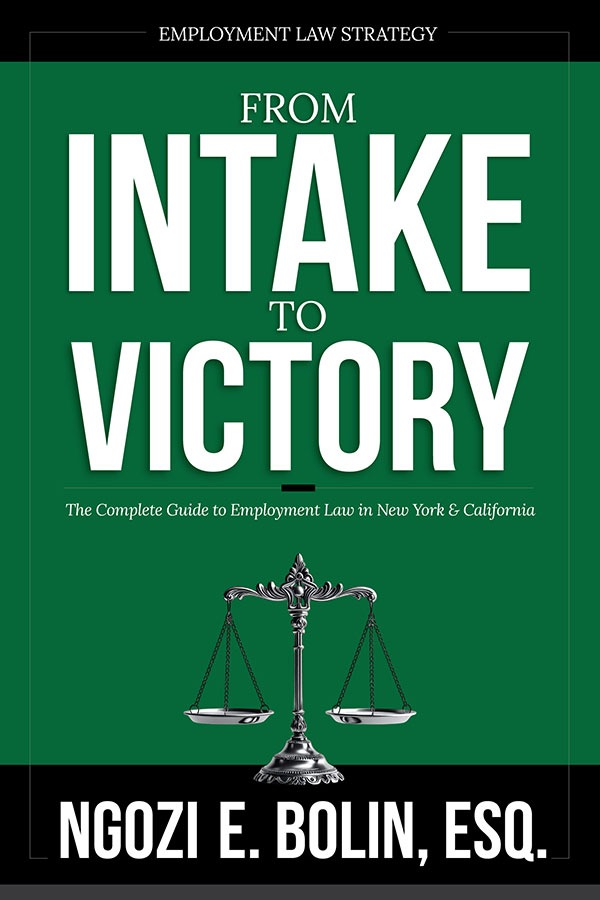
Ngozi E. Bolin, Esq. has been admitted to practice in New York since 1991 and California since 2013, with three decades of experience in litigation and jury and bench trials. She is the author of the Law Made Simple series of plain-English legal guides.
Worried a termination is really about your age? Book a flat-fee consultation to understand your options, or browse the Law Made Simple books.
This article is general information, not legal advice for your specific situation.
