

28 Dec Writ of Supersedeas
The short answer
A writ of supersedeas asks the California Court of Appeal to issue its own stay while an appeal is pending. It is used to preserve the status quo so a win on appeal is not lost, including when the other side keeps trying to collect on a judgment despite the automatic stay under Code of Civil Procedure §916(a).
A Writ of Supersedeas is a powerful tool to get the appellate court to issue its own stay when Respondents are still attempting to collect the award in violation of the automatic stay imposed by California Code of Civil Procedure Section 916(a).
What Does Supersedeas Mean?
Supersedeas is a Latin term for an order that suspends, or supersedes, the enforcement of a judgment while it is on appeal. In California practice the word comes up in two ways: the writ of supersedeas, which is an order from the Court of Appeal staying enforcement, and the supersedeas bond, the common name for the undertaking an appellant posts to stay enforcement of a money judgment.
Why Seek a Writ of Supersedeas?
Supersedeas is warranted under People ex rel. San Francisco Bay v. Town of Emeryville (1968) 69 Cal.2d 533 to protect the jurisdiction of this Court, since the “fruits of a reversal would be irrevocably lost unless the status quo is maintained.” (Id. at 537.)
Further, because Respondents have been attempting to enforce and collect on the Judgments on appeal, Appellants invoke Estate of Dabney, 37 Cal. 2d 402, at page 407 where the court held that “[I]t is also established law that even where an appeal effects a statutory stay, the writ of supersedeas will issue “in a corrective capacity” in case of a violation or threatened violation of such stay.”
How Do You File a Petition for Writ of Supersedeas?
The proceedings are commenced in the Court of Appeal having jurisdiction over your appeal by a Petition For Writ of Supersedeas. You have to state right up front that the petition for writ of supersedeas seeks to stay and correct the enforcement proceedings already commenced by the Respondents while these appeals are pending. You will need to support your petition by a verified recital of the facts supporting the petition and exhibits. It must be supported by a Memorandum of Points and Authorities in Support of the Petition for Writ of Supersedeas. This petition is thus like a hybrid between a motion and a brief. It must be written in the same style as you would your appellate briefs.
The governing rule is California Rules of Court, rule 8.112. Among other things, the petition must bear the same title as the appeal, be verified, explain the necessity for the writ and include a memorandum. Unless the court orders otherwise, any opposition must be served and filed within 15 days after the petition is filed, and you may ask for a temporary stay while the petition is pending.
What Authorities Support a Writ of Supersedeas?
Some of the best authorities relied upon to win a Writ of Supersedeas are Varian Medical Systems, Inc. v. Delfino (2005) 35 Cal.4th 180 (“Varian”), where the California Supreme Court explained that perfecting an appeal from an order stays all proceedings in which: (1) the proceedings directly or indirectly seek to enforce the order; (2) the possible results in the proceeding are irreconcilable with the possible outcomes of the appeal; or (3) the very purpose of the appeal is to avoid the need for the trial court proceeding at issue. (Varian, supra, 35 Cal.4th at pp. 189-190; see Eisenberg et al., Cal. Practice Guide: Civil Appeals and Writs, supra, * 7.9.1 [“effects” test established in Varian determines applicability of the automatic stay]; see also Socialist Workers etc. Committee v. Brown (1975) 53 Cal.App.3d 879, 890-891 [holding that an appeal precludes the trial court from issuing a subsequent order that effectively enforces the appealed order], cited with approval in Varian, supra, 35 Cal.4th at p. 189, fn. 6.)
Do You Need a Supersedeas (Appeal) Bond to Stay Enforcement?
An appeal bond, often called a supersedeas bond, is the undertaking that stays enforcement of a money judgment while an appeal is pending. Under section 917.1, subdivision (b), the undertaking must be for double the amount of the judgment, or one and one-half times the amount if it is given by an admitted surety insurer.
Under Code of Civil Procedure section 916, subdivision (a), the perfecting of an appeal automatically stays proceedings in the trial court unless certain statutory exceptions apply. One such exception, section 917.1, subdivision (a), is that the perfecting of an appeal does not stay enforcement of a money judgment unless the judgment debtor gives an undertaking. Subdivision (d) of section 917.1, however, makes the undertaking requirement inapplicable to a judgment for costs only. Under section 917.1, subdivision (d), a judgment debtor who pays and does not appeal the amount of a judgment for damages, but who appeals from the order after judgment assessing costs and attorney fees, is not required to file an appeal bond to stay execution on the unpaid attorney fees award. Execution is automatically stayed pending appeal by operation of the statute. (Ziello v. Superior Court (1999) 75 Cal.App.4th 651, 652, 655; see also Chapala Management Corp. v. Stanton (2010) 186 Cal.App.4th 1532, 1546; Dowling v. Zimmerman (2001) 85 Cal.App.4th 1400, 1430.)
In Varian, the Supreme Court held that any subsequent trial court proceedings on matters “embraced” in or “affected by” the appeal are void, not merely voidable: “[S]ection 916, as a matter of logic and policy, divests the trial court of jurisdiction over the subject matter on appeal — i.e., jurisdiction in the fundamental sense.” (Varian, at p. 198.) Finally, because the trial court is temporarily deprived of jurisdiction in this most fundamental sense pending the appeal, the Court held that automatic reversal is required, rejecting the Chief Justice’s argument that reversal of the trial court’s judgment or affected orders is proper only if there has been a showing of prejudice. (Id. at p. 199, fn. 10; see id. at pp. 201-207 (conc. & dis. opn. of George, C. J.).)
Conclusion
A Writ of Supersedeas is a powerful tool not to be ignored by trial and appellate lawyers. When carefully briefed, it is very often viewed favorably by the appellate courts.
Related: California’s one final judgment rule explains when a judgment can be appealed in the first place.
Frequently Asked Questions
What is a writ of supersedeas?
It is a petition asking the California Court of Appeal to stay enforcement while an appeal is pending, so the status quo is maintained and the fruits of a reversal are not irrevocably lost (People ex rel. San Francisco Bay v. Town of Emeryville (1968) 69 Cal.2d 533).
Does filing an appeal automatically stay a judgment in California?
Perfecting an appeal generally stays trial court proceedings under Code of Civil Procedure section 916(a), but exceptions apply. Under section 917.1(a), a money judgment is not stayed unless the judgment debtor gives an undertaking (bond); section 917.1(d) makes that requirement inapplicable to a judgment for costs only.
Can I seek a writ of supersedeas if an automatic stay already applies?
Yes. Even where an appeal effects a statutory stay, the writ of supersedeas will issue in a corrective capacity when the stay is violated or threatened (Estate of Dabney, 37 Cal.2d 402, 407).
What does a petition for writ of supersedeas need to include?
It is filed in the appellate court with jurisdiction over your appeal and must include a verified recital of the supporting facts, exhibits, and a memorandum of points and authorities, written in the same style as an appellate brief.
What is a supersedeas bond in California?
It is the common name for the undertaking an appellant gives to stay enforcement of a money judgment during an appeal under Code of Civil Procedure section 917.1. The amount is double the judgment, or one and one-half times the judgment if it is given by an admitted surety insurer.
How long does the other side have to oppose a petition for writ of supersedeas?
Unless the court orders otherwise, any opposition must be served and filed within 15 days after the petition is filed (California Rules of Court, rule 8.112).
About the author
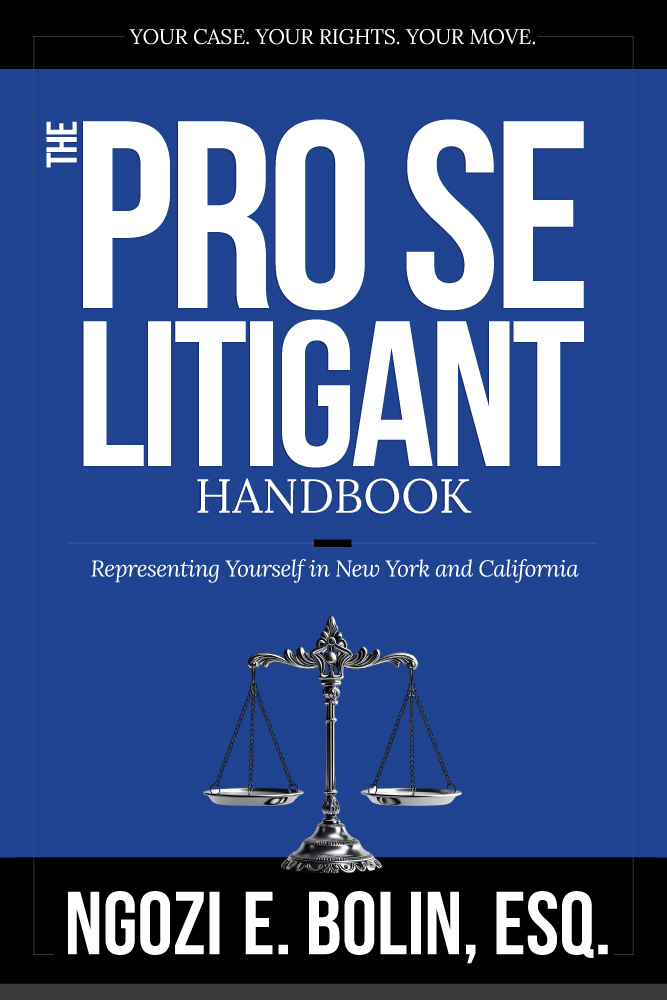
Ngozi E. Bolin, Esq. has been admitted to practice in New York since 1991 and California since 2013, with three decades of experience in litigation and jury and bench trials. She is the author of the Law Made Simple series of plain-English legal guides.
Dealing with enforcement during an appeal? Book a flat-fee consultation to understand your options, or browse the Law Made Simple books.
This article is general information, not legal advice for your specific situation.
