

07 Aug How to Evict a Tenant in New York: Notices, Timelines and Common Mistakes
To evict a tenant in New York, you have to give the correct written notice, file a nonpayment or holdover case in court, win a judgment, and obtain a warrant of eviction. Only a sheriff, marshal or constable can carry out that warrant, and only after giving the tenant written notice. You cannot remove a tenant yourself, no matter how much rent is owed.
That is the short answer. The longer one is that New York expects you to get each of those steps exactly right, in order, and to be able to prove it. If you are months behind on rent you were counting on, that can feel deeply unfair. But the owners who get their units back are the ones who learn how the process works before they send the first piece of paper, so let’s walk through it.
First, What You Cannot Do
Let’s get the hard part out of the way. In New York, a tenant or lawful occupant of a home can be removed only through a court proceeding. Changing the locks, taking doors off the hinges, moving belongings to the curb, shutting off the heat or electricity, or threatening someone until they leave is an unlawful eviction.
This protection is broader than most owners expect. It covers anyone who has lawfully lived in the unit for 30 consecutive days or longer, with or without a lease. Under RPAPL section 768, an unlawful eviction is a class A misdemeanor, and it carries a civil penalty of $1,000 to $10,000 for each violation.
I know how tempting self-help looks when someone is living in your property for free. Please do not do it. A lockout does not end the tenancy. As the New York Attorney General’s tenant guide explains, only a sheriff, marshal or constable can carry out a court-ordered warrant to evict.
Why Landlords With Good Cases Still Lose
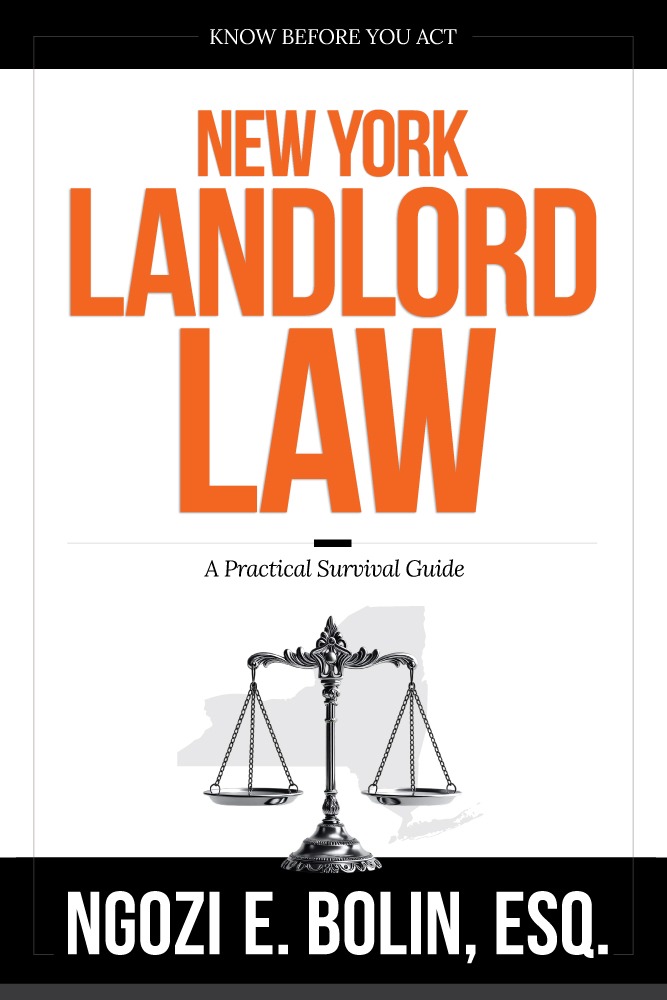
Here is the thing I most want you to take from this article. New York landlords rarely lose because they had no reason to evict. They lose because one step was done wrong. I wrote in New York Landlord Law: A Practical Survival Guide that “winning in New York housing court is not about being right. It is about being precise.” I meant it literally.
The book opens with the story of a Queens owner of a two-family house who was owed more than $14,000. He kept careful records, never touched the locks, and still had his case dismissed in minutes because his notice was served one day too early. The judge never looked at the debt.
Think of an eviction as a chain. Each step depends on the one before. If one link is defective, a judge generally will not let you repair it in the middle of the case. You go back to the start. That is why the real work happens before you file, and why “but the tenant owes me the rent” will not rescue a case with a bad notice.
Your first decision is which kind of case you have. A nonpayment case is for a tenant who owes rent, and its purpose is to collect the rent or recover the unit if it goes unpaid. A holdover case is for everything else, such as a tenant who stays after the tenancy was properly ended or who has seriously violated the lease. Each has its own notice that must come first, and the notice for one will not work for the other. The New York State court system publishes plain-language guides and free form programs for both.
If the Problem Is Unpaid Rent
A nonpayment case looks like the simplest case there is. In practice these cases are thrown out all the time, and the usual culprit is the rent demand.
Two written notices come before the court papers. The first is a late-rent notice. If you have not received the rent within five days of the date stated in the lease, Real Property Law section 235-e requires you to send the tenant a written notice by certified mail saying the rent was not received. Skip it, and the tenant can raise that as a defense later.
The second is the rent demand itself. Under RPAPL section 711, you must give a written demand with at least 14 days’ notice, telling the tenant to pay the rent owed or give up the unit. It has to be served in the manner the statute requires. A text message, an email or a note under the door is not a rent demand, even if the tenant plainly knows what is owed.
The mistake I see most often is in the number. The demand should list the months and the amounts, and it should ask only for rent. Since 2019, a landlord cannot recover late fees or other non-rent charges in a nonpayment case, and late fees themselves are capped at $50 or 5 percent of the monthly rent, whichever is less. It feels reasonable to add them, because the tenant really does owe them. Leave them out. An overstated demand is one of the most common ways owners sink their own cases.
Before you send it, reconcile the demand against your ledger and credit every partial payment, so the two documents tell the same story. Then wait the full 14 days. If the tenant pays everything demanded within that time, you cannot start the case.
If You Want the Unit Back
Maybe the rent is paid, but the lease is ending and you do not want to renew, or you have a month-to-month tenant and you are ready to move on. For this you need advance written notice under Real Property Law section 226-c. The same notice is required if you plan to raise the rent by 5 percent or more. How much notice depends on how long the tenant has lived there or the length of the lease, whichever is longer:
- 30 days: the tenant has lived there less than one year and does not have a lease of at least one year.
- 60 days: more than one year but less than two years of occupancy, or a lease of at least one year but less than two.
- 90 days: more than two years of occupancy, or a lease of at least two years.
If your notice goes out late, you do not lose the right to end the tenancy, but the tenancy continues on its existing terms until the full notice period has run. Rent-regulated units follow their own renewal rules, so confirm the unit’s status before you rely on these tiers.
One more trap deserves a mention. In a holdover case, be careful about taking rent after your termination notice has been served. A judge may decide that accepting a full or partial payment created a new rental agreement, and your case ends there.
Check Good Cause Before You Send Anything
Many owners still assume they can simply decline to renew an unregulated unit. The Housing Stability and Tenant Protection Act of 2019 tightened the notice rules described above, and the Good Cause Eviction Law, passed in 2024, went further. It applies in New York City and in other cities, towns and villages that adopt it by local law.
Where it applies, you cannot evict or refuse to renew a covered tenant without a reason the law recognizes as good cause. Nonpayment, a substantial lease violation, nuisance, and the owner’s good-faith plan to live in the unit are examples. Rent increases above a set yearly threshold are presumed unreasonable. And Good Cause sits on top of the notice rules. It does not replace them.
Many small owners are exempt. By default the law does not cover a landlord with no more than 10 units in the state, although a locality that opts in can set a different number. Owner-occupied buildings with no more than 10 units are exempt, as are rent-regulated units, condos and co-ops, and buildings with a certificate of occupancy issued on or after January 1, 2009, for 30 years.
Here is my caution. Believing you are exempt is not the same as being able to prove it. A change in ownership or in who lives in the building can change the answer without anyone noticing, and Chapters 9 and 21 of the book spend time on how these exemptions are lost. Covered or exempt, you must attach the official Good Cause Eviction Law notice to leases, renewals, rent demands, non-renewal notices and petitions. Settle your status before you send anything.
What Happens Once You File
When the notice period ends without payment or a move-out, the court process begins. In order, it looks like this:
- File. You file a notice of petition and petition with the court that covers the property’s location.
- Serve. You cannot serve the papers yourself. An adult who is not a party to the case must deliver them using a method allowed by RPAPL section 735, which includes required mailings. Proof of service is then filed with the court within three days.
- Appear. Under RPAPL section 733, the papers generally must be served at least 10 and not more than 17 days before the court date. New York City Housing Court uses a different schedule for nonpayment cases, where the tenant answers first and the court then sets the date.
- Judgment and warrant. If you win, the court issues a judgment and a warrant of eviction directed to an enforcement officer.
- Notice of eviction. Under RPAPL section 749, the officer must give the tenant at least 14 days’ written notice, and the eviction must take place on a business day between sunrise and sunset.
Owners tend to treat service as a formality. It is part of the case. If your process server’s affidavit has the wrong date, or the mailings were skipped, you can lose on that alone.
Be ready for delay as well. A tenant who appears can ask for a postponement. In a holdover case, a judge can delay the warrant for up to one year in cases of hardship. In a nonpayment case, the court must cancel the warrant if the tenant pays the full rent due before the eviction is carried out, unless you show the rent was withheld in bad faith.
Judges also decide these cases on documents, not on explanations. Bring the lease and any renewals, each notice exactly as it was served, the proof of service, and a clean rent ledger, and make sure the dates and amounts match across all of them. In Chapter 19 of the book I suggest reading your own file the way a tenant’s attorney would, looking for the single defect that ends the case. Find it before you file.
Should You File at All?
This is the question owners skip, usually because they are angry, and understandably so. Court is one tool. Even a clean case can take months while the rent goes unpaid.
So before you file, do the arithmetic without the emotion. How many more months of rent will you lose while the case is pending? What will the filing and legal fees come to? How likely is a dismissal on a technical point? And if you win a money judgment, can this tenant actually pay it? A judgment against someone with nothing to collect is a number on a page.
Sometimes the honest answer is a negotiated exit. As I put it in the book, “Settlement is not surrender.” A written agreement in which the tenant leaves by a fixed date, perhaps with some of the arrears forgiven or a payment toward moving costs, can return the unit to you sooner and with far less risk than a trial. Put the terms in writing, do not pressure the tenant, and accept a no. New York City has its own rules for buyout offers, which the city housing agency explains here, and an offer pressed too hard can become a harassment claim.
And once in a while the wise move is to take a short-term loss and move on, particularly when the tenant cannot pay, your own paperwork has gaps, or the unit’s regulatory status is uncertain. The last chapter of the book works through how to choose among litigating, settling and walking away.
When to Talk to a Lawyer
Plenty of small owners handle a simple case on their own with the court’s forms. I would get advice before serving the first notice if the unit may be rent regulated or covered by Good Cause, if the tenant has a lawyer, if the tenant has raised repair or retaliation issues, if your records are incomplete, or if an earlier case was dismissed.
If you would like a second set of eyes on your notice, your rent demand or your overall plan, a limited scope consultation with The Bolin Firm is a good place to begin.
This article is general information about New York law, not legal advice for your situation. The rules change and vary by locality, so confirm the current requirements before you act.
Frequently Asked Questions
How long does an eviction take in New York?
There is no fixed timeline. The required notices, the wait for a court date, any postponements or stays, and the 14-day notice of eviction mean most cases take months, and contested cases can take much longer.
Can I change the locks if my tenant stops paying rent?
No. Anyone who has lawfully lived in the unit for 30 consecutive days or longer can be removed only through a court case, and a lockout is a class A misdemeanor with civil penalties of $1,000 to $10,000 per violation.
Is a text or email enough to demand overdue rent?
No. A nonpayment case requires a written rent demand giving at least 14 days’ notice, served in the manner the statute requires, in addition to the certified-mail notice that rent was not received.
What happens if my tenant pays after I start the case?
If the tenant pays everything demanded within the 14 days, you cannot start the case at all. After a judgment, the court must cancel a nonpayment warrant if the full rent due is paid before the eviction is carried out, unless you show the rent was withheld in bad faith.
I only own a two-family house. Does Good Cause Eviction apply to me?
Often not, because the law by default exempts landlords with no more than 10 units in the state and owner-occupied buildings with no more than 10 units. You still need to confirm your status under the local rules and give the tenant the required Good Cause notice stating the exemption.
Last reviewed October 2026. This article is general information, not legal advice.
